
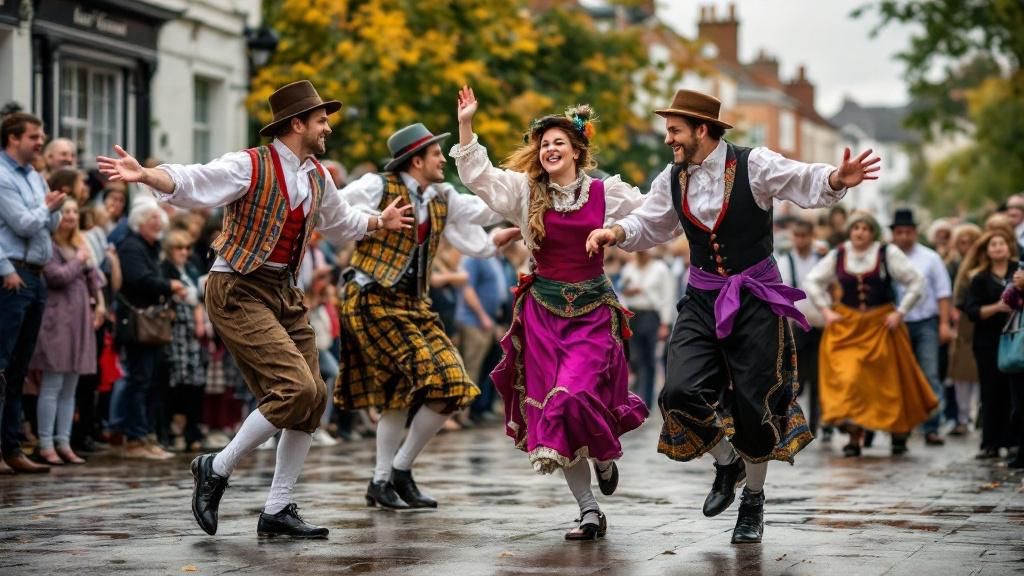
Once dismissed as a nostalgic echo of England’s countryside traditions, Morris dancing is experiencing an surprising resurgence amongst Britain’s younger generation. From university societies to rural commons, devotees aged under thirty are reviving interest in the intricate steps, bell-adorned accessories, and colourful costumes that have defined this ancient custom. This article examines the factors driving this cultural resurgence, assesses how modern dancers are reimagining the style, and explores what this fresh enthusiasm reveals about contemporary British attitudes towards heritage and community.
The Cultural Renaissance of Morris Dancing
The revival of Morris dancing amongst young people across Britain represents a striking move from decades of declining participation. What was once perceived as an purely rural or older pursuit has evolved into a dynamic cultural phenomenon, with student societies, metropolitan dance collectives, and community groups actively embracing the tradition. This comeback questions established stereotypes and proves that young people today truly recognise the worth of preserving and celebrating Britain’s folkloric heritage, revitalising practices that looked set for obscurity.
This revived interest transcends simple nostalgic interest; younger dancers are deliberately transforming Morris dancing for today’s world. They blend modern music, experiment with inventive dance routines, and establish inclusive communities that accept people without regard to background or prior experience. The shift reflects a more expansive cultural transformation wherein young British people actively pursue genuine links to their ancestral traditions whilst at the same time reshaping tradition’s significance, fostering a ongoing exchange between historical authenticity and present-day creative forms that resonates with what matters to their age group.
Why Younger Generations Are Adopting This Time-Honoured Craft
Morris dancing’s attraction for younger generations transcends nostalgic curiosity. Contemporary dancers appreciate the art form’s deep cultural roots whilst recognising its capacity for creative expression and social connection. The accessibility of modern Morris groups, paired with their open-minded values, has transformed the perception of this historically exclusive pursuit. Young people are realising that Morris dancing offers a genuine alternative to conventional leisure activities, delivering both bodily exertion and real communal involvement in an increasingly digital world.
Sense of Community
In an era characterised by social fragmentation, Morris dancing groups offer young people with tangible communities rooted in common principles and joint participation. The inclusive nature of modern Morris organisations actively welcomes newcomers irrespective of background or experience, cultivating authentic bonds and meaningful connections. Participants often describe their dancing cohorts as chosen families, offering emotional support and a sense of place that extends well beyond the performance season. This sense of community proves especially important for young people managing university or early career transitions.
The collaborative framework of Morris dancing inherently encourages collective togetherness and shared accountability. Each dancer’s participation directly affects the group’s aesthetic coordination and rhythmic precision, creating mutual reliance that reinforces social bonds. Many young dancers note that their Morris groups enable real friendships in ways that conventional social settings often fail to deliver. The collective dedication to preserving and evolving this cultural heritage creates a strong feeling of common goal amongst members.
Exercise and Movement and Overall Wellbeing
Morris dancing requires substantial bodily effort, combining cardiovascular exercise with intricate movement control and muscular conditioning. Young dancers benefit from enhanced physical capability whilst participating in activity that carries cultural significance rather than simply functional. The rhythmic, repetitive nature of Morris footwork offers contemplative benefits alongside physical conditioning, contributing positively to mental wellbeing. Participants commonly mention the comprehensive wellness advantages as a primary motivation for continued participation in their local Morris groups.
Beyond heart health advantages, Morris dancing cultivates proprioceptive awareness and physical self-assurance, especially beneficial for adolescents dealing with body image concerns. The focus on technical precision and synchronized movement redirects focus from appearance-based anxiety toward capability and achievement. Furthermore, the outdoor performance tradition associated with Morris dancing prompts people to interact with natural environments and seasonal rhythms, enhancing psychological wellbeing through engagement with the natural world and cultural heritage.
Regional Variations and Modern Adaptations
Morris dancing practices vary significantly across Britain’s areas, with each region creating distinctive styles capturing community traditions and geography. The Cotswolds preserve the robust, athletic “Cotswold” style, whilst the North West favours the more elaborate “Northwest” tradition showcasing ornate attire and complex patterns. New generation dancers are eagerly taking up these regional variations, participating in training and festivals to perfect traditional practices whilst recognising the subtle cultural elements woven throughout each style. This geographical diversity provides contemporary performers with diverse opportunities into Morris dancing, helping them relate to traditions grounded in their home regions.
Modern adaptations are concurrently broadening Morris dancing’s appeal beyond traditional contexts. Younger practitioners incorporate contemporary music, experimental choreography, and inclusive casting practices, challenging historical gender and age restrictions. All-gender ensembles and LGBTQ+ Morris groups have emerged, fundamentally reshaping the tradition’s social dynamics. These innovations maintain the essential character—rhythmic footwork, bells, and festive energy—whilst rendering the practice more accessible and relevant to twenty-first-century participants. Such creative reinterpretation demonstrates that heritage traditions need not remain static, successfully bridging historical authenticity with modern sensibilities.
The Future of Morris Dancing in the United Kingdom
As Morris dancing continues to captivate younger audiences, the tradition stands at a pivotal juncture. Contemporary dancers are actively reshaping the form whilst maintaining its cultural heritage, bringing new dance moves and accessible methods that resonate with modern sensibilities. Universities document unprecedented enrolment in Morris societies, whilst festivals welcome exceptional participation of young participants. This momentum suggests the art form is moving beyond nostalgic curiosity to legitimate contemporary practice, establishing sustainable foundations for sustained development and lasting significance within British communities across the country.
Looking ahead, Morris dancing’s trajectory appears quite favourable. The intersection of social media promotion, easy-to-follow learning techniques, and younger generations’ desire for authentic community connection creates ideal conditions for thriving. Organisations are funding mentoring initiatives and regional competitions, building skill development routes and enabling skill transmission between veteran and newer performers. Should this enthusiasm endure, Morris dancing may finally move beyond its image as exclusively historically-oriented, instead becoming acknowledged as a dynamic, developing art form that meaningfully enriches contemporary British society and deepens social connections across generations.
